Product Overview
This high-precision Front Left ABS Wheel Speed Sensor is a professional-grade replacement engineered specifically for the Mazda 323 and Mazda Protege (1999–2003). It is a direct-fit unit for original equipment (OE) part number B25D-43-73XG, ensuring that the vehicle's anti-lock braking and electronic stability systems receive accurate, real-time data.
OE Part Numbers: Direct replacement for B25D-43-73XG, B25D4373XG, and ALS1130.
Vehicle Application: Precision-matched for the Mazda 323 and Mazda Protege (including Protege5) for model years 1999, 2000, 2001, 2002, and 2003.
Core Technology: Optimized for fast response and high signal accuracy, which are essential for maintaining traction and safety under diverse driving conditions.
Technical Specifications
Harness & Connector: Features a 36-inch (914 mm) heavy-duty harness with a single rectangular female connector.
Terminals: Utilizes 2 male blade-type terminals for a secure, moisture-resistant electrical connection.
Mounting: Designed for wheel mounting via a stable 2-bolt hole configuration to ensure precise sensor alignment.
Durability: Built with a high-strength housing designed for a low failure rate and stable performance in harsh under-vehicle environments.
OE Numbers
Wholesale & Manufacturing Advantages
Certified Excellence: Manufactured in facilities holding IATF 16949, ISO 9001, ISO 14001, and CE certifications, meeting global automotive standards.
Massive Production Scale: An annual capacity of 5 million units guarantees a stable and scalable supply chain for global distributors.
Full Customization: Supports comprehensive OEM/ODM services, including specific material upgrades and customized branding or packaging (Brand, Neutral, or Private Label).
Service Commitment: Backed by an industry-leading 36-month warranty with flexible lead times of 7–60 days and a Minimum Order Quantity (MOQ) of 100 units.
Mazda ABS Sensor solutions: Customization, global sourcing, and OEM quality
Complete ABS Sensor Solutions for Global Markets
Backed by a vast network of vetted manufacturers in China, Elecdura helps global buyers source ABS sensors with brand-level quality at unbeatable factory pricing.
From design optimization to packaging customization, from bulk stock supply to certification support — we are the sourcing partner B2B buyers trust.
At Elecdura, we offer an extensive range of ABS sensors to fit a wide variety of vehicles, including passenger cars, commercial trucks, and specialty applications.
With dozens of connector types, cable lengths, sensor heads, and mounting structures, we ensure high compatibility with both OEM and aftermarket platforms. For large-volume or long-term customers, we provide fully customizable solutions based on your specifications or reference samples:
- Cable length & plug type customization
- Sensor housing & material adjustments
- Custom branding (logo, part number, label)
- Tailored packaging for retail or bulk
Whether you require a one-to-one replacement or a private-label solution, our engineering and production teams are ready to support you from development to delivery.
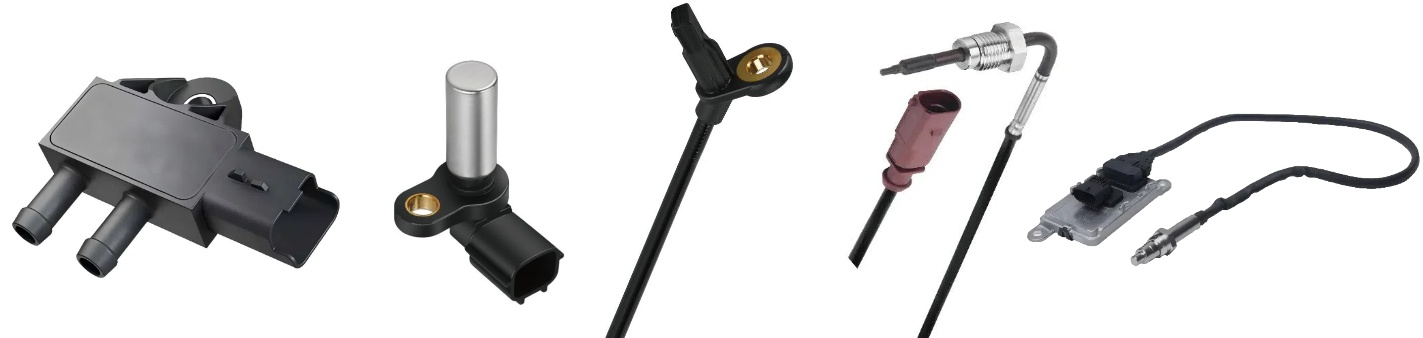
Mazda ABS Sensor: Engineered with globally trusted component partners
Behind every stable signal and durable sensor lies a foundation of trusted materials. At Elecdura, we only work with globally recognized suppliers to ensure every ABS sensor delivers the performance, longevity, and safety our customers demand.
Our key component partners include:
Infineon – High-reliability semiconductor chips
Melexis – Advanced automotive sensing ICs
Allegro Microsystems – Magnetic field sensing solutions
FPK / Semiment – Core electronics and magnetic circuit components
LEONI – Premium automotive-grade cables
ELEKTRISOLA – Precision copper wire & winding materials
These partnerships help us deliver consistent product quality across batches, reduce field failure rates, and meet OE-level reliability standards.

Elecdura ABS Sensor | IATF Certified, Global Compliance Support
At Elecdura, quality is engineered and certified. Our production facilities operate under the IATF 16949 quality management system and comply with ISO 14001 for environmental and occupational health standards.Whether you need to meet EMC, REACH, RoHS, or other regional regulations, our engineering and compliance teams are experienced in supporting custom certification requirements across Europe, North America, South America, and Asia-Pacific.We have supported OEM projects and aftermarket clients in obtaining certifications and test reports for various target markets, ensuring smooth market entry and compliance.Let us know your local requirements — we'll make sure your ABS sensors are ready.
Mazda ABS Sensor In-House Production: Molded, Assembled, Packed, and Shipped
Precision-molded housings form the structural backbone of every ABS sensor. Our in-house injection lines ensure dimensional accuracy, high waterproof ratings, and consistent material strength across batches.

Our semi-automated assembly lines integrate signal cores, connectors, and cables with tight tolerance control. Standardized procedures ensure consistent signal output and plug compatibility for every sensor.
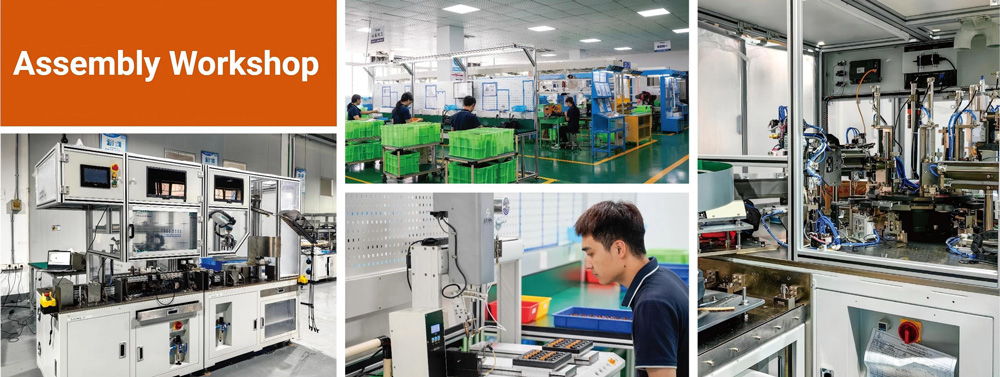
Final inspections are followed by flexible packing lines that support both bulk industrial cartons and customized retail boxes. With digital inventory management and global shipping support, we ensure fast order fulfillment and clean outbound handling.

Mazda ABS Sensor Advanced Equipment Showcase
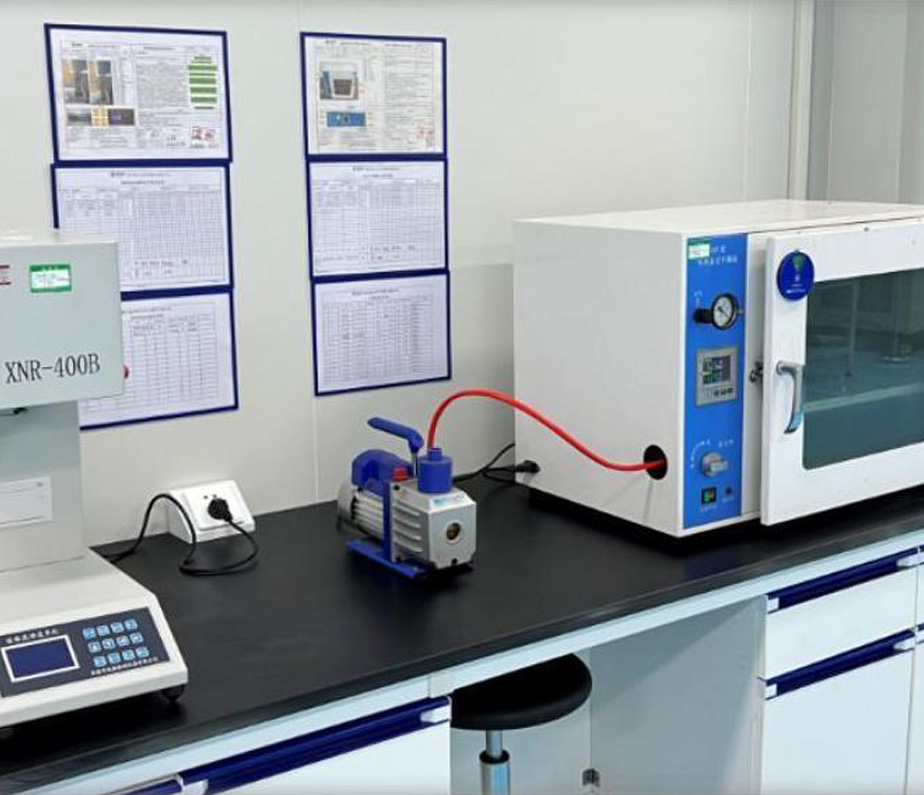
To ensure every ABS Sensor meets performance expectations, Elecdura continuously invests in advanced production and testing equipment.
Strict Inspection for Mazda ABS Sensor
Every ABS Sensor from Elecdura undergoes a rigorous multi-step quality inspection process before shipment.Our factory implements strict control standards throughout production — from material inspection to final signal testing — to ensure signal accuracy, durability, and safety in real-world use.

Mazda ABS Sensor Supplier Strong Export Capability and Stable Supply
Elecdura ensures large-scale, stable supply of alternators to global markets. Each pallet and carton is meticulously packaged to export standards for secure transport. Leveraging years of export expertise and consistent demand from long-term clients, we provide reliable delivery assurance and supply chain continuity for bulk orders.
ABS Sensor Supplier Partnership Drives Market Success for Top Distributors
Elecdura collaborates with leading distributors and brands worldwide — helping our partners dominate their local aftermarket. Through professional sourcing, customized product development, and close market research, we've supported clients in becoming the Top 1 aftermarket suppliers in South America (in some categories). Our integrated marketing and supply capabilities make us more than a factory — we're your strategic growth partner.
 Successful client collaboration showcased at trade fair booth | |  Distributor partnership meeting for aftermarket product planning | |  Elecdura with international buyer in Brazil Exhibition |
 Elecdura assisting South American client in aftermarket development | |  Elecdura team and partners at international auto parts exhibition | |  Warehouse of Elecdura global partner displaying stocked |
FAQ-ABS Sensor - B25D4373XG
Q1: Which vehicle models is part number "B25D4373XG" compatible with? Is it the same as the previously viewed "B25D" series parts?
A: This part is specifically designed for the Mazda Protégé, with detailed compatibility for the 2000-2003 model years. This exactly overlaps with the compatible years of the previously analyzed part "B25D4372YB" (for 2000-2003 models) but differs slightly in the starting year from "B25D4371YB" (for 1999-2003 models). They belong to the same "B25D" series but have different specifications.
Q2: What are its key physical specifications (connector, harness, bolt holes)?
A: Its core installation specifications are: 1 rectangular male connector, 2 blade-type female terminals, a harness length of 784 mm (approx. 30.9 inches), and mounting at the Wheel location via 3 bolt holes. Its design of "3 bolt holes" is the key identifying feature that distinguishes it from other parts in the same series (e.g., B25D4371YB with 2 holes, B25D4372YB with 4 holes).
Q3: What are the main differences between it and the series parts "B25D4371YB" and "B25D4372YB"? Are they interchangeable?
A: All three are designed for the 2000-2003 Protégé but are three completely different and non-interchangeable independent parts. The core differences lie in the number of mounting bolt holes and the harness length:
B25D4371YB: 2 bolt holes, 760 mm harness.
B25D4372YB: 4 bolt holes, 749 mm harness.
B25D4373XG (this product): 3 bolt holes, 784 mm harness.
The differences in the number of bolt holes and harness length directly determine their physical compatibility with the vehicle's spindle or hub, so they are absolutely NOT interchangeable.
Q4: Why does the same car model require so many sensors with different numbers of bolt holes?
A: This typically corresponds precisely to different specific mounting locations or component assemblies on the vehicle. For example:
2-bolt-hole design: Might be for a front wheel specific mounting bracket or an early-year configuration.
3-bolt-hole design: Might be for the rear wheel or another generation of hub bearing unit.
4-bolt-hole design: Might be for a different drivetrain type (e.g., FWD vs. 4WD) or components from a different supplier.
This is a common practice in automotive engineering—"using part numbers to distinguish mounting variants"—ensuring each location gets a physically perfect match.
Q5: When purchasing, how can I accurately select "B25D4373XG" from these three similar parts?
A: Faced with such a similar family of parts, the most reliable procedure is to perform a strict "old part - specifications" double match:
1. Step 1 (Mandatory): Remove the old sensor and verify if its part number is "B25D4373XG".
2. Step 2 (Critical Verification): Count the number of bolt holes on the old part. If the old part has 3 bolt holes, it matches B25D4373XG; if it has 2 holes, it corresponds to B25D4371YB; if it has 4 holes, it corresponds to B25D4372YB. This is the ultimate safeguard against errors due to vague or misread part numbers.
Do not rely solely on year memory; you must double-confirm by combining the part number with physical characteristics.