Article authored by the Elecdura Supply Chain Expert Team, with over a decade of experience empowering global importers, wholesalers, and distributors. |
Alternator Not Charging? 7 Common Causes and How to Test
You turn the key, and the engine fires up — but that battery warning light stays on. Or worse, your headlights dim, your dashboard flickers, and your vehicle dies while driving. These are classic signs that your alternator isn't charging properly.
The alternator is the heart of your vehicle's charging system. It converts mechanical energy from the engine into electrical energy, keeping your battery charged and powering every electronic component on board. When it fails, your vehicle won't run for long.
The good news? Many "alternator failures" are actually simpler issues — loose belts, corroded connections, or a weak battery. This guide walks you through the seven most common causes and shows you exactly how to test each one.
Key Takeaways
Misdiagnosis is common — many "alternator failures" are actually battery, wiring, or belt issues.
A simple multimeter test can confirm whether your alternator is charging (13.8–14.7V) or failing.
Belt tension and condition should be the first thing you check — a slipping belt mimics alternator failure.
Voltage regulator failure can cause both undercharging and dangerous overcharging.
A reliable OE Quality Alternator wholesale supplier ensures you get the right part the first time.
What a Healthy Charging System Looks Like
Before diagnosing problems, you need to know what "normal" looks like. A healthy charging system produces 13.8 to 14.7 volts at the battery with the engine running at 1,500–2,000 RPM and electrical loads on. Below 13.5V or above 15.0V signals a fault.
With the engine off, a rested battery should read 12.6 to 12.8 volts. Anything below 12.2V indicates a discharged or failing battery.
7 Common Causes of Alternator Not Charging
1. Loose or Worn Serpentine Belt
The serpentine belt drives the alternator. If it's loose, glazed, or worn, it slips — especially under electrical load. A slipping belt produces a squealing noise and prevents the alternator from spinning fast enough to generate proper output.
How to check: Inspect belt tension and condition. A general rule: the belt should deflect approximately one inch (25mm) with moderate finger pressure at the midpoint between pulleys. Look for cracks, glazing, or fraying.
2. Corroded or Loose Battery Connections
Poor contact at the battery terminals increases resistance, preventing current from flowing efficiently. This is one of the most commonly misdiagnosed issues — a "dead alternator" that's actually just a corroded terminal.
How to check: Inspect battery terminals for white or green corrosion. Ensure cables are tight and clean. Perform a voltage drop test: measure voltage between the alternator output and battery positive terminal — it should be less than 0.5V.
3. Faulty Voltage Regulator
The voltage regulator controls the alternator's output. When it fails, it can either prevent charging entirely (dead battery) or cause dangerous overcharging (boiling electrolyte, damaged electronics).
Symptoms: Fluctuating lights, battery not charging, check engine light with codes like P0562 (low system voltage) or P0622.
How to check: Start the engine and measure voltage at the battery. If it reads below 13.5V or above 15.0V, the regulator (or alternator) is likely faulty.
4. Worn Brushes or Slip Rings
Inside the alternator, carbon brushes transfer current to the spinning rotor via slip rings. Over time, brushes wear down and slip rings become dirty or grooved, reducing conductivity.
Symptoms: Intermittent charging, flickering warning light, reduced output at idle.
How to check: This requires disassembly. If other causes are ruled out, brush wear is a likely internal fault.
5. Failed Rectifier (Diode Failure)
The rectifier converts AC to DC. A failed diode allows AC current into the system, causing erratic electrical behavior and reduced charging output.
Symptoms: Dim lights, electrical interference (buzzing radio), battery not holding charge.
How to check: A professional alternator tester or oscilloscope can identify diode failure. Visual inspection may show burnt or cracked diodes.
6. Wiring or Ground Faults
Damaged wiring, corroded connectors, or poor ground connections create voltage drops that disrupt charging. Modern "smart" alternators communicate with the ECU via LIN or COM terminals — if these signal wires fail, the alternator won't charge properly.
How to check: Perform voltage drop tests on both positive and negative sides. Check the alternator's communication plug for corrosion or damage.
7. Excessive Electrical Load or Parasitic Draw
Added accessories (audio systems, lights, winches) or a parasitic drain (a light that stays on) can overwhelm the alternator or drain the battery faster than it can recharge.
How to check: Perform a parasitic draw test: connect an ammeter in series with the negative battery cable, let modules sleep (30+ minutes), and note the reading. Above 200mA is excessive for a truck.
How to Test Your Alternator: Step-by-Step
| Step | Action | Expected Reading |
|---|---|---|
| 1 | Battery voltage (engine off) | 12.6–12.8V |
| 2 | Charging voltage (engine running, 2,000 RPM) | 13.8–14.7V |
| 3 | Stress test (headlights, A/C on, 2,000 RPM) | Above 13.0V |
| 4 | Voltage drop test (alternator B+ to battery +) | Less than 0.5V |
| 5 | Cranking voltage (during start) | Above 9.6V |
If any reading falls outside the expected range, the charging system has a fault. Use the diagnostic table below to narrow it down.
When to Replace vs. Repair
| Scenario | Recommended Action |
|---|---|
| Belt slipping or worn | Replace belt |
| Corroded terminals | Clean and tighten |
| Voltage regulator failure | Replace regulator (if serviceable) or alternator |
| Failed diode | Replace alternator |
| Worn brushes | Replace alternator or rebuild |
| Wiring fault | Repair wiring |
| Parasitic draw | Locate and fix source |
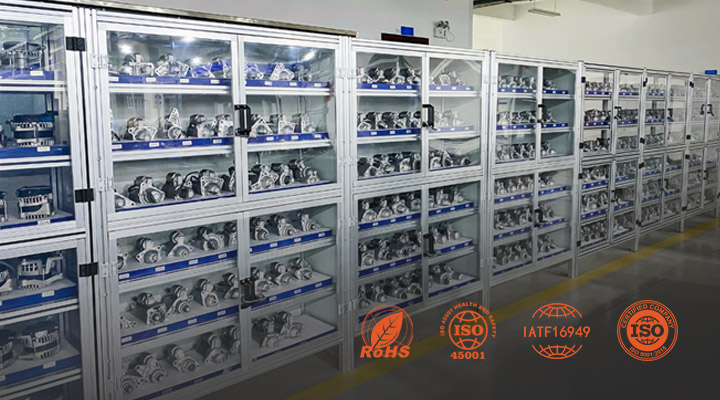
For internal alternator faults (diodes, brushes, bearings), replacement is typically the most cost-effective solution. When sourcing replacement units, working with a reliable alternator supplier ensures you get the correct fitment and OE-quality performance.
Why Choosing the Right Alternator Supplier Matters
When replacement is necessary, the quality of your alternator supplier directly impacts reliability and downtime. A trusted OE Quality Alternator wholesale partner like Elecdura offers more than just products — we provide a complete sourcing solution:
Product + supplier screening — we vet and select the best manufacturing partners, saving you months of factory hunting
Competitive pricing + tiered options — based on your market position and volume needs
Broad vehicle coverage — through integrated resources, covering far more models than any single factory
Flexible payment terms + marketing support — for established partners
Long-term partnership pathways — regional distributorships and priority access to new products
Choose Elecdura — and get the OE-quality alternators you need, backed by a strategic partner that protects your margins and simplifies your sourcing.
Frequently Asked Questions (FAQ)
A: Jump-start the car. If it stays running, the battery is likely the issue. If it stalls shortly after, the alternator isn't charging.
A: With the engine running at 2,000 RPM, voltage should be 13.8–14.7V at the battery.
A: Only for a very short distance. The vehicle runs on battery power until it drains (typically 20–30 minutes), then stalls.
A: Common causes include loose belts, corroded connections, faulty voltage regulators, worn brushes, failed diodes, wiring faults, and excessive electrical load.
A: Total cost typically ranges from $540 to over $1,100 depending on vehicle and parts quality.
A: Yes. Modern vehicles may use smart charging systems with LIN or COM communication. Always match by OE number to ensure compatibility.
External Resources (High-Authority Links)
Need a reliable alternator supplier? Contact Elecdura today for a catalog, sample order, or wholesale quote.
This guide is for informational purposes. Always verify specifications with your supplier before ordering.
Get Exclusive Industry Insights Delivered. Please Contact Us!


Recent News
1.Why Water-Cooled Alternators Are Ideal for High-Temperature and Offshore Conditions
2025-09-242.What is the Difference Between Air-Cooled and Water-Cooled Alternator?
2025-11-273.Ultimate Guide to Sourcing OE-Quality Auto Parts
2026-02-034.Cost comparison for new and remanufactured alternators
2026-04-20